
FDA gluten-free threshold
FDA-regulated foods carrying a gluten-free claim must contain less than 20 ppm of unavoidable gluten and meet the rule’s other criteria.
NATURES DATES
Raised by sunshine
 Wholesale+966 56 993 3559
Different patterns, clearer choices
Vegan, vegetarian, gluten-free and other eating patterns can mean very different things. Plain dates may fit many of them, but flavored products, recipes and manufacturing conditions vary. The current package—and your actual reason for following the pattern—should guide the decision.
Claims, decoded
Use regulated claims, full ingredients and the exact current package to decide whether a product fits your needs.
FDA-regulated foods carrying a gluten-free claim must contain less than 20 ppm of unavoidable gluten and meet the rule’s other criteria.
Packaged-food labels identify major allergens such as milk, peanuts, tree nuts, wheat, soy and sesame.
Ingredients, formulations and facilities can change, so verify the exact current product each time.
A clearer decision process
The strongest choice is not the one with the most lifestyle words—it is the one whose ingredients, claims and safeguards match your actual need.
People choose eating patterns for cultural, ethical, religious, medical or personal reasons. A useful label check begins with that reason: an occasional preference does not require the same controls as celiac disease or a serious food allergy.
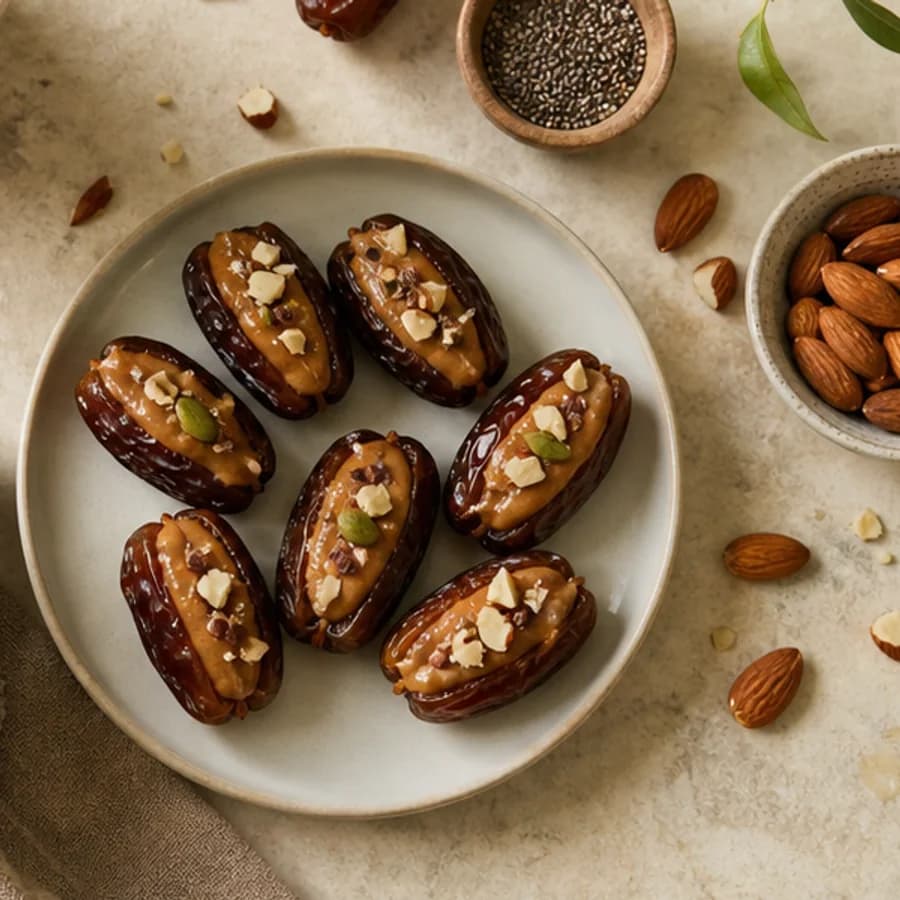
A plain date and a filled, coated or flavored date product are not interchangeable. Read every ingredient and the current allergen statement. Dairy, nuts, peanuts, wheat, soy or sesame may appear in pairings or prepared products even when the fruit itself is plant-based.
Dates can contribute flavor and texture to plant-forward meals, but they do not make the whole pattern nutritionally complete. NIH guidance notes that people eating little or no animal food may not get enough vitamin B12, which occurs naturally in animal foods; use qualified advice for fortified foods or supplements.
In the United States, foods using FDA-regulated terms such as “gluten-free” must meet specific criteria, including less than 20 ppm of unavoidable gluten. For celiac disease, inspect the exact product claim and consider cross-contact rather than relying only on the fruit’s natural ingredients.
Vegan, gluten-free, organic, kosher and halal labels answer different questions; none automatically guarantees the others. Likewise, an allergen statement does not certify a dietary philosophy. Verify the specific claim or certification on the current package.
Removing major food groups can affect fiber, iron, calcium, vitamin B12 and other nutrients. If symptoms, celiac disease, allergies or another condition are driving restrictions, work with a clinician or registered dietitian before making broad exclusions.
General educational information only. It is not medical advice and is not intended to diagnose, treat, cure or prevent any condition. Product information should be verified on the current package.
Sources & methodology
This page uses FDA labeling rules and federal nutrition guidance. It cannot certify a product, diagnose an intolerance or replace an individualized diet plan.