
Generally considered low
The FDA uses this as a general guide for a nutrient in one labeled serving.
NATURES DATES
Raised by sunshine
 Wholesale+966 56 993 3559
Evidence-informed wellness
Medjool dates can be one enjoyable whole-fruit choice within a varied eating pattern. This guide keeps the focus on everyday habits, the current Nutrition Facts label and advice that respects individual needs—not miracle-food claims.
Label literacy
These FDA reference points provide a quick starting place for reading—not a personalized eating prescription.
The FDA uses this as a general guide for a nutrient in one labeled serving.
This FDA guide helps readers interpret a nutrient’s contribution per labeled serving.
All listed calories and nutrients refer to the stated serving, which is not a personal portion recommendation.
Everyday framework
Good nutrition information should help you interpret a food in context, not turn it into a cure-all.
Dietary guidance emphasizes the overall eating pattern rather than a single ingredient. Dates can sit alongside other fruits, vegetables, grains, protein foods and dairy or fortified alternatives in a routine shaped by your preferences, culture and needs.
Every calorie and nutrient number on a Nutrition Facts label refers to the serving shown at the top. The FDA also makes an important distinction: a serving size reflects how much people typically consume; it is not a personal recommendation.
The % Daily Value helps place a nutrient amount in the context of a total daily diet. As a general FDA guide, 5% DV or less per serving is considered low and 20% DV or more is considered high.
The label can show how much dietary fiber and potassium a packaged date product provides. Values can differ by product and serving, while Daily Values are general label references—not personalized targets for every body.
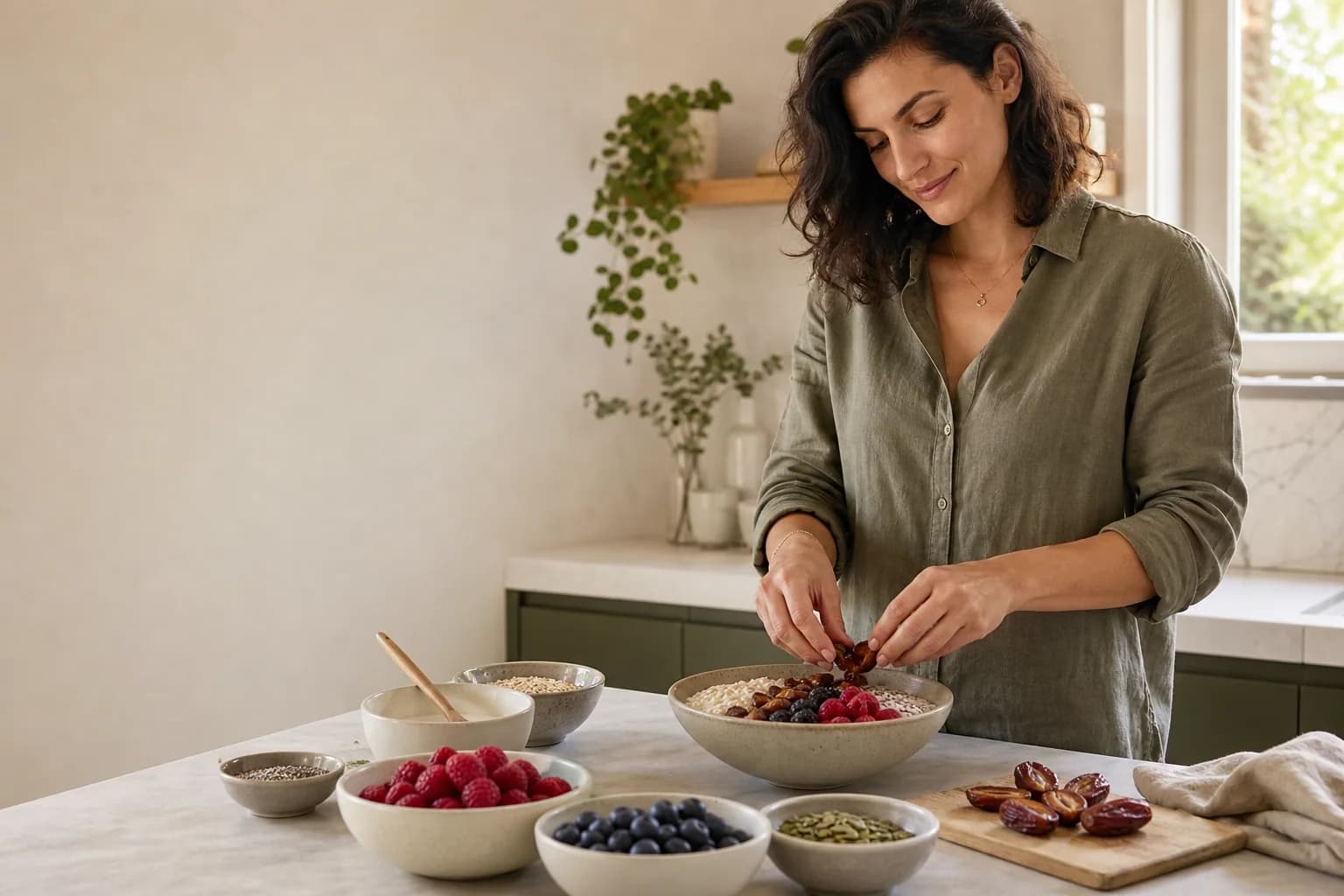
Enjoy dates on their own, chop them into oats or pair them with foods such as plain yogurt, nuts, seeds or cheese. Pairing is a practical way to add flavor, texture and variety; it does not make the snack a treatment for any condition.
Nutrition needs are personal. If you manage diabetes, kidney disease, pregnancy-related concerns, food allergies or medicines that affect nutrients such as potassium, use your care team’s guidance and the current product label.
General educational information only. It is not medical advice and is not intended to diagnose, treat, cure or prevent any condition. Product information should be verified on the current package.
Sources & methodology
This page paraphrases public nutrition guidance from the FDA, USDA, HHS and NIH. Links open the original references so readers can review the evidence and context directly.