
The rule for every serving
Open and inspect each date, then remove the hard pit completely before preparation.
NATURES DATES
Raised by sunshine
 Wholesale+966 56 993 3559
A parent-friendly food guide
Children learn to eat over time. Dates can be one flavor within a varied family routine, but preparation matters: remove every pit, adapt the sticky texture to the child’s development, serve food seated and stay close while they eat.
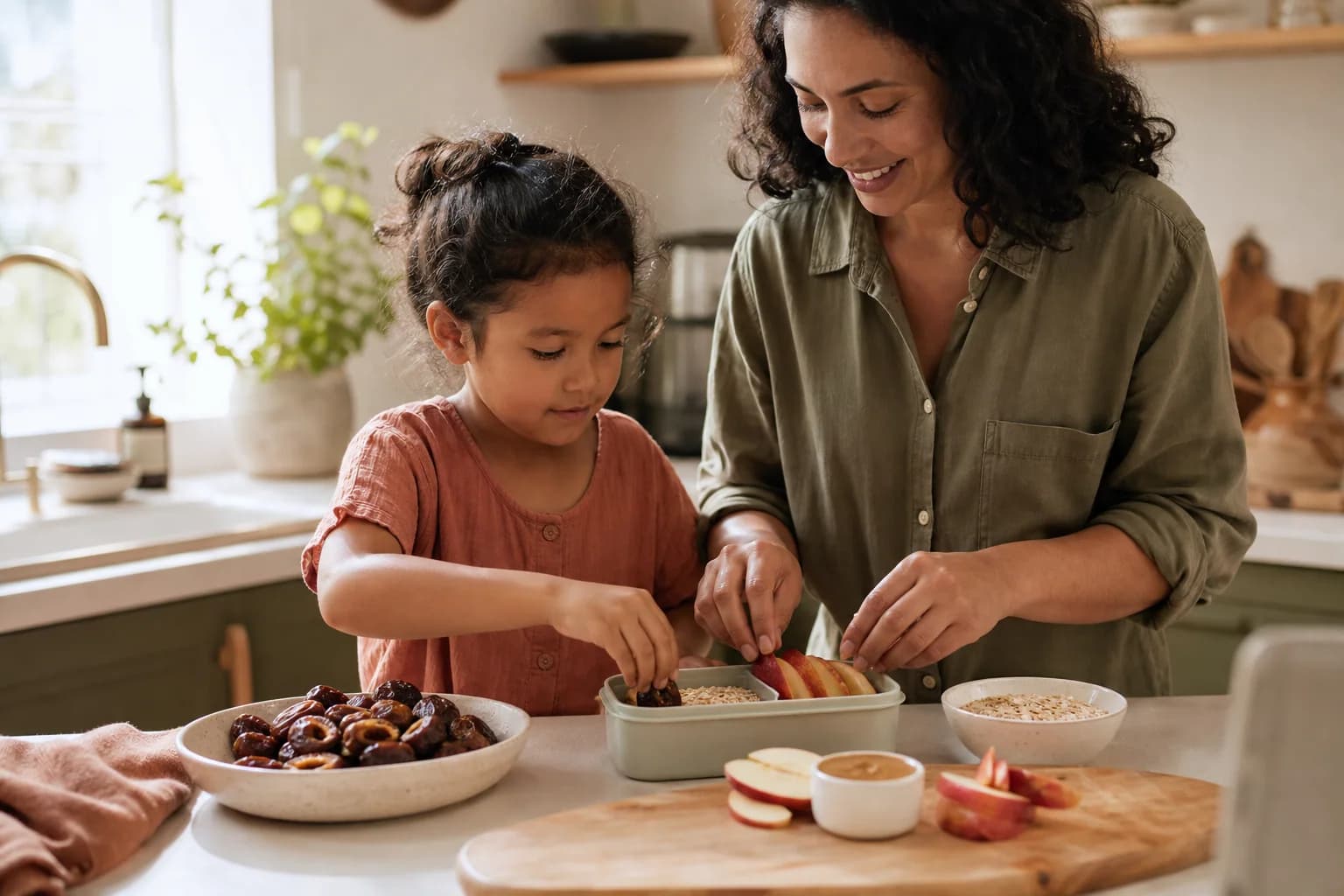
Safety before snack ideas
Preparation, supervision and label awareness matter more than making a snack look perfect.
Open and inspect each date, then remove the hard pit completely before preparation.
Young children should eat upright in a safe place with an attentive adult nearby.
Read the entire current label when dates are paired with milk, nuts, peanuts, wheat, sesame or other ingredients.
For real family life
Good feeding guidance combines food variety with developmentally appropriate preparation, supervision and less pressure at the table.
One snack does not need to do everything. USDA guidance encourages variety across fruits, vegetables, grains, protein foods and dairy or fortified soy alternatives. Dates can be one fruit choice alongside many other foods over the day or week.
Whole, sticky or chewy dried fruit can be difficult for young children to manage. Remove the pit completely, then mash, soften, blend or finely chop the date into another food according to the child’s chewing and swallowing skills. Do not serve it whole to a young child.
CDC guidance recommends having young children sit upright in a high chair or another safe place, keeping mealtimes calm and watching them throughout eating. Walking, playing, riding in a car or eating while distracted increases avoidable risk.
Appetite can change from day to day. Caregivers can choose what and when to offer, while children respond to their own hunger and fullness cues. They do not need to clean the plate, and food should not become a reward or punishment.
Dates may be paired with yogurt, nut or seed butters, oats or other ingredients. Check the full ingredient list and allergen statement on each current package—recipes and formulations can change. Follow the child’s established allergy plan.
Feeding skills and nutrition needs differ. Ask a pediatric clinician about swallowing difficulty, repeated coughing or choking, poor growth, restrictive eating, suspected allergy or the safest texture for a child with developmental or medical needs.
General educational information only. It is not medical advice and is not intended to diagnose, treat, cure or prevent any condition. Product information should be verified on the current package.
Sources & methodology
This page paraphrases current CDC, FDA and USDA guidance for caregivers. It cannot assess an individual child’s development, swallowing safety, allergy risk or nutrition needs.